
There is a persistent myth in the Canadian music scene that “true” creativity must be a bolt of lightning hitting an empty canvas. We often think that to be original, we must avoid sounding like anyone else.
The reality? Every musical legend started as a fan. The secret to moving from an aspiring bedroom producer to a staple of the Canadian charts isn’t avoiding your influences; it’s learning how to “draw” from them intelligently. As we navigate the high-competition landscape of 2026, understanding this process is what separates the imitators from the innovators.

The Science of Influence: Why We Mimic to Create
Creativity is a form of combinatorial play. Our brains don’t create something from nothing; they take existing patterns and reorganize them.
Historically, this is how genres are born.
Consider these verifiable musical lineages:

The Weeknd
The Toronto global superstar has openly cited Michael Jackson and Prince as his North Stars. He took the vocal delivery of 80s pop and submerged it in the dark, moody textures of modern R&B.*
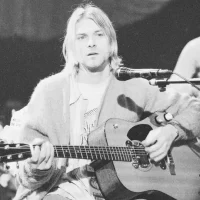
Nirvana
Kurt Cobain transformed music by blending The Beatles’ melodic hooks with the heavy grit of Led Zeppelin and Black Sabbath, and he was singing “Hey Jude” by age two. Nirvana’s early sets were filled with hard rock covers and tributes like “Aero Zeppelin,” reflecting his deep study of 70s legends.

Celine Dion
Her sound is a masterful fusion of soul legends like Aretha Franklin, the vocal power of Whitney Houston, and the theatricality of Freddie Mercury. By integrating influences from Barbra Streisand and Michael Jackson with genres like Broadway and gospel, she created a unique global identity.*
*Images sourced from the artists’ social media and official websites
Training Your Creative Muscle
To find your unique sound in the Canadian music market, you have to stop listening as a consumer and start listening as an architect. Here is how you can train your creativity using your favorites as a blueprint:

1. Deconstruct the Arrangement
- Pick a track by an artist you admire, don’t look at the melody yet. Look at the structure.
- Map out when the bass enters, how the percussion shifts in the second verse, and where the “tension” is released.
- Build a new song using that exact same structure but with a completely different genre or BPM.
- Don’t just tell them your name. Tell them to take out their phones.

2. The “3-Artist Mashup”
- Originality often happens at the intersection of three unrelated influences.
- Take the vocal grit of one artist, the synth textures of a second artist, and the rhythmic swing of the third. One of them could be an innovative in Canada,
- By the time you blend these three conflicting styles, the result is something that sounds like you.

3. Reverse-Engineer the Emotion
- Instead of copying a melody, identify the emotional frequency of a track. Is it “melancholic but hopeful”? Is it “aggressive but polished”?
- Write a song that aims for that same emotion using instruments the original artist never used. e.g., recreating the vibe of a heavy metal track using only an acoustic guitar and a cello.
Creativity is a muscle, and like any muscle, it requires resistance to grow. Don’t wait for the “perfect” idea.
Start with an influence, add your perspective, and watch your signature sound emerge from the echoes of your heroes.
Join our Digital Music Community of independent artists today to know to the professional tools, protection, and industry insights you need to turn your creative vision into a thriving career in Canada.
*Source Wikipedia
Need Help With Your Strategy?
At Music in Motion Canada, we specialize in taking the guesswork out of your career.

Author: Andrea Marin
Andrea Marin is a social media marketing specialist for Music in Motion Canada.