Music is More than a Melody
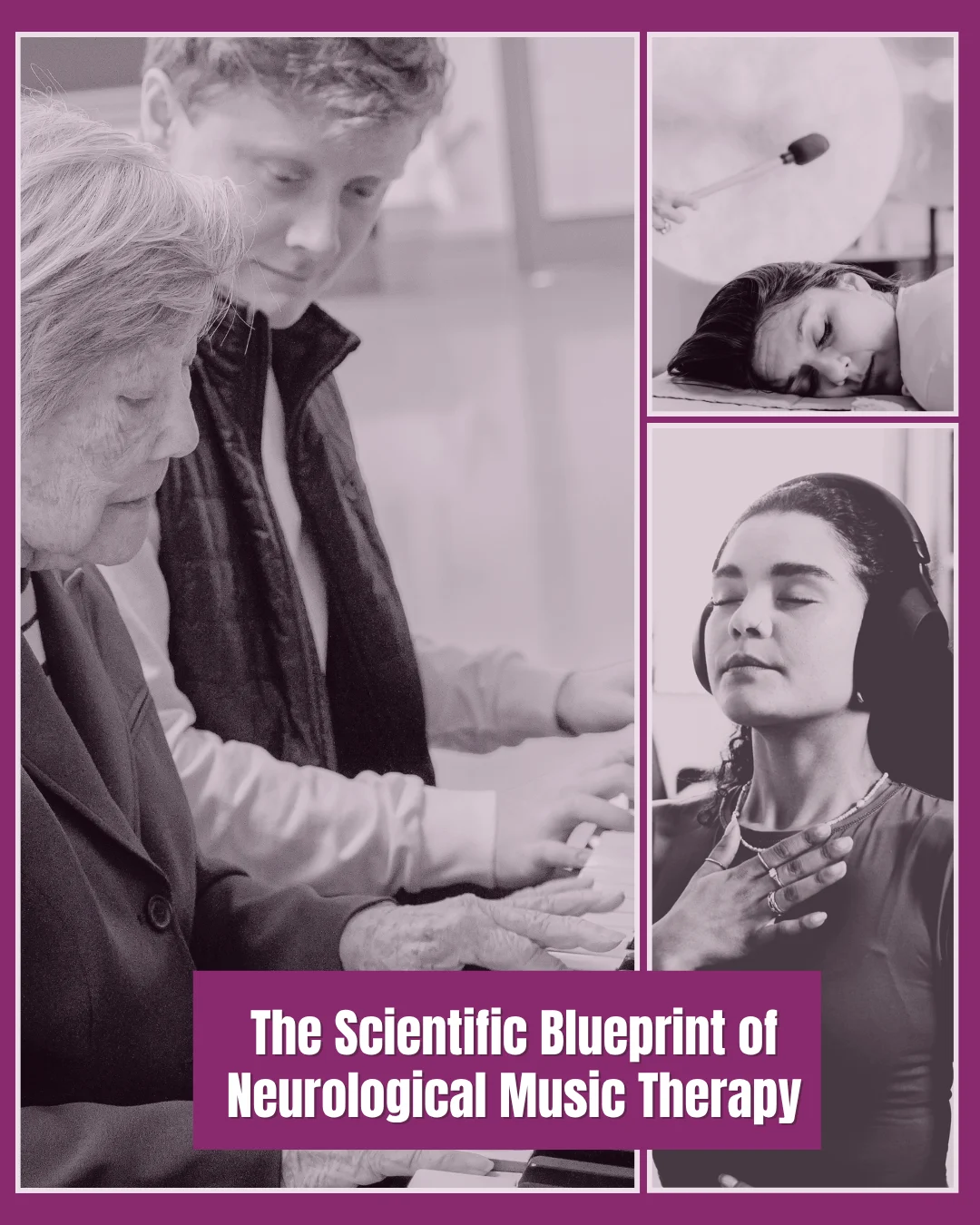
For decades, the idea that “music heals” was treated as a poetic sentiment. However, as we move through 2026, the medical community has firmly established Neurological Music Therapy (NMT) not as an artistic elective, but as a standardized, evidence-based neuroscience intervention.
Neurological Music Therapy (NMT) is defined as the clinical application of music to functional changes in the brain, targeting non-musical goals in motor, speech, and cognitive domains (Thaut & Braun Janzen, 2024). Unlike traditional music therapy, which may focus on emotional expression, NMT is rooted in the brain’s processing of rhythm and melody to bypass damaged neural pathways.
The Brain as a Musical Processor
The core of NMT is the “Rational Scientific Mediating Model” (RSMM). This model demonstrates that music is a biological language that engages the human brain globally, rather than in a localized “music center” (Academy of Neurologic Music Therapy, 2019).
Because music activates the auditory-motor system, it can be used to “prime” the brain for movement or speech. Research indicates that auditory-based interventions facilitate neuroplasticity by modulating the dopaminergic system and enhancing connectivity within the Default Mode Network (DMN) (Frontiers in Public Health, 2025).
Proven Clinical Applications
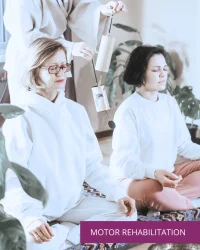
1. Motor Rehabilitation
One of the most successful NMT techniques is Rhythmic Auditory Stimulation (RAS). This is primarily used for patients with Parkinson’s Disease (PD) and Stroke survivors. Studies have proven that RAS significantly improves gait speed, stride length, and symmetry in Parkinson’s disease (PD) patients (PMC8403394, 2024).

2. Speech and Language
For those suffering from Aphasia (the loss of speech often caused by stroke), NMT utilizes Melodic Intonation Therapy (MIT).
MIT utilizes the uninjured functions of the brain’s non-dominant hemisphere (melody and tone) to stimulate speech production
Neuroimaging has shown that this technique increases white matter fibres in the arcuate fasciculus, literally rebuilding the bridge for language (ASHA Scoping Review, 2023).

3. Cognitive and Emotional Support
In patients with Alzheimer’s Disease (AD) and other dementias, music is one of the last “memory systems” to remain intact.
Music therapy has been shown to reduce cognitive decline and ameliorate pathology by increasing melatonin levels and stimulating the mesolimbic reward system (PMC12235852, 2025).
A 2024 systematic review confirmed that music interventions significantly improve memory, language orientation, and quality of life in older adults with dementia (PMC11012733, 2024).
If you are a musician or a producer in Canada, your work is more than entertainment; it is a tool for human potential.
We invite you to explore the intersection of your craft and science. Whether you are creating “cinematic soundscapes” for a project or producing tracks for local indie artists, remember that rhythm is a fundamental biological driver.
Scientific References & Citations
- Thaut, M. H., & Braun Janzen, R. (2024). Neurologic Music Therapy: Research and Clinical Practice. Academy of NMT.
- Frontiers in Public Health (2025). Cognitive enhancement through music therapy: Meta-analytic evidence.
- PMC11012733 (2024). Benefits of Music Therapy in Cognitive Impairments of Alzheimer’s-Type Dementia: A Systematic Review.
- PMC8403394 (2024). Randomized controlled trial of neurologic music therapy in Parkinson’s disease.
- ASHA Scoping Review (2023). Research on Music-Based Interventions for Aphasia.
Need Help With Your Strategy?
At Music in Motion Canada, we specialize in taking the guesswork out of your career.

Author: Andrea Marin
Andrea Marin is a social media marketing specialist for Music in Motion Canada.