There is a universal phantom that haunts every creator, does not discriminate between musicians, producers, writers or artists in general. It’s the sudden, suffocating silence when inspiration vanishes, leaving behind a blank canvas, an empty DAW (Digital Audio Workstation) timeline, or an untouched page.
“If you are currently searching for how to overcome creative block as an artist, here is the first truth you need to hear: your talent hasn’t disappeared”.
Creative burnout is rarely a sign that you’ve reached the end of your artistic journey. More often than not, it is an indicator that your mind is recalibrating for its next major evolution.

Understanding Creative Burnout
Why Your Mind Goes Blank? Before you can break through artist block, you must understand what causes it. Creative burnout usually stems from three main triggers:
Perfectionism:
The expectation that every idea must immediately be a masterpiece.

Over-consumption without Creation:
Drowning in other people’s finished work without giving your brain room to process your own raw thoughts.

Mental Fatigue:
Forcing output when your emotional and mental reserves are empty.
When these factors combine, your brain initiates a safety mechanism, it shuts down ideation to prevent further exhaustion
2 Famous Artists Who Turned Creative Block into Masterpieces.
History’s greatest works rarely came from moments of effortless inspiration. They were born in the trenches of heartbreak, burnout, and artistic uncertainty.
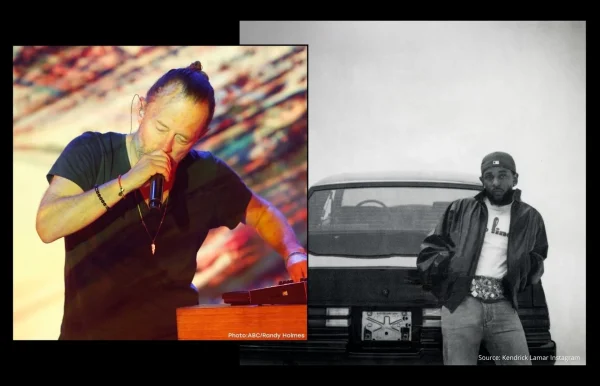
Thom Yorke (Radiohead): The Guitar Burnout That Birthed Kid A
The Crisis: Following the massive global success of OK Computer in 1997, lead singer Thom Yorke suffered severe mental exhaustion. He developed a sudden, deep aversion to guitar music—his primary tool. Every time he sat down to write a song with a guitar, he felt physically sick and completely stuck.
The Creative Pivot: Instead of forcing the old formula, Yorke abandoned guitars entirely. He bought a synthesisers, drum machines, and started experimenting with minimalist electronic beats and Dadaist “cut-up” lyrical techniques (pulling random lines out of a hat).
The Takeaway: When your primary instrument or medium creates a block, put it away. Forcing a tool that feels “dead” will only prolong the block.
Kendrick Lamar: Overcoming an 18-Month Silence
The Crisis: After winning a Pulitzer Prize for his 2017 album DAMN., Kendrick Lamar faced the overwhelming pressure of perfectionism. He publicly admitted to suffering from severe writer’s block that lasted for 18 months, feeling completely drained of new ideas and disconnected from his purpose.
The Creative Pivot: He stopped trying to write commercial anthems and turned inward. Through therapy, solitude, and self-reflection, he began documenting his struggles with ego, trauma, and the pressure of being labeled “the voice of a generation.”
The Takeaway: Writer’s block often happens when you try to protect a past image of yourself. Vulnerability and honesty about your current state, even if messy, can unlock your next era.
“The creative process is a process of surrender, not control.” — Julia Cameron
Strategies to Beat Artist Block Today
If you are looking for what to do when an artist runs out of ideas, rely on actionable systems rather than waiting around for inspiration to strike:
1. Shift from Output to Input
You cannot pour from an empty cup. When your output drops to zero, stop forcing it and switch entirely to consumption. Read a book outside your usual genre, visit a gallery, watch a documentary on an unfamiliar topic, or sit in silence.
2. Change Your Primary Medium
If you are a musician feeling stuck in your DAW, close your laptop and pick up a sketchbook. If you are a visual artist, write a short story or a poem. Switching mediums removes the performance anxiety tied to your primary craft and allows your subconscious to play freely.
3. Reframe Rest as Active Work
In a hustle-driven culture, downtime is easily mistaken for laziness. However, neuroscientific research shows that the brain makes its most creative connections when in a “default mode network”, the state activated during wandering thoughts, walks, or rest.
Your Next Breakthrough Awaits
The next time you hit an artistic wall, don’t try to force your way through with frustration. Step back, reframe the rest, and remember that every artist you admire has stood in that exact spot.

Author: Andrea Marin
Andrea Marin is a social media marketing specialist for Music in Motion Canada.